

You pull out the butter, sugar, cinnamon, and flour, already imagining a tray of warm, crackly snickerdoodles, and then you notice the cream of tartar is missing. Frustrating? Maybe. A reason to cancel the baking session?
Not at all. You can still make soft, chewy, cinnamon-sugar cookies with crisp edges and tender centres using a simple ingredient you probably already have: baking powder. This snickerdoodle recipe without cream of tartar keeps the cozy flavor and familiar texture of the classic cookie while making the process easier and more pantry-friendly.
It is perfect for last-minute cravings, holiday baking, family treats, or those afternoons when you simply want the kitchen to smell like butter and cinnamon. With the right measurements, a gentle mixing method, and careful baking time, you can create delicious homemade snickerdoodles that taste so satisfying, no one will miss the traditional ingredients.
Table of Contents
Why This Recipe Works Without Cream of Tartar
Cream of tartar serves two main purposes in a classic snickerdoodle. First, it supplies acid that reacts with baking soda, producing carbon dioxide and helping the cookie rise. Second, it contributes a light tang that cuts through the sweetness and gives the cookie a flavor profile distinct from a standard sugar cookie.
Removing it without changing anything else would leave baking soda without enough acid to react properly. That could produce cookies that spread unpredictably, brown too quickly, or carry an unpleasant alkaline taste. The solution is to replace both parts of the leavening system with double-acting baking powder, which already combines an acid with a base.
Double-acting baking powder reacts twice: once when it becomes wet and again when it is heated. That two-stage reaction is useful for cookies because it offers a little insurance between mixing and baking. The dough begins developing tiny gas bubbles as soon as the wet and dry ingredients meet, then receives another burst of lift in the oven.
The cookies rise just enough to create a soft interior before settling into their familiar round shape. Since baking powder has a gentler effect than a strong baking-soda-and-acid combination, the finished snickerdoodles may have a slightly milder tang and a softer, less sharply cracked surface. Those differences are subtle, especially once the dough is coated in cinnamon sugar.
This recipe also compensates through its fat, sugar, and egg balance. One whole egg supplies structure and moisture, while an additional yolk adds richness and encourages chewiness without introducing too much extra water. Granulated sugar helps the edges crisp and creates those delicate surface cracks.
Creamed butter traps air during mixing, giving the baking powder a head start and preventing the cookies from feeling heavy. The amount of flour is high enough to keep the dough scoopable but not so high that the centers become dry.
An optional teaspoon of lemon juice can restore a hint of acidity for bakers who miss the classic tang. It is not necessary for the baking powder to work, and the finished cookies will not taste like lemon at that small amount.
It simply sharpens the flavor in the same way a pinch of salt makes caramel taste more caramel-like. The combination of balanced leavening, an extra egg yolk, properly creamed butter, and controlled baking time makes this recipe dependable even without the traditional ingredient.
Ingredients You Need
The ingredients for this easy snickerdoodle recipe without cream of tartar are probably already in your kitchen. For the most reliable results, use fresh baking powder, real butter, and accurate flour measurements. Baking powder slowly loses strength after opening, so a forgotten tin that has been sitting in the cupboard for several years may not give the cookies enough lift. You can test it by stirring a small spoonful into hot water. It should bubble energetically within a few seconds. Butter should be softened at room temperature rather than microwaved until partly melted, because unevenly melted butter can make the dough oily and difficult to control.
| Ingredient | Amount | Purpose |
|---|---|---|
| All-purpose flour | 2¾ cups or 330 grams | Gives the cookies structure |
| Baking powder | 2 teaspoons | Replaces the traditional leavening system |
| Fine salt | ½ teaspoon | Balances sweetness and strengthens flavor |
| Unsalted butter, softened | 1 cup or 226 grams | Adds richness, flavor, and controlled spread |
| Granulated sugar | 1⅓ cups or 267 grams | Sweetens and creates crisp edges |
| Large egg | 1 | Supplies moisture and structure |
| Large egg yolk | 1 | Adds chewiness and richness |
| Vanilla extract | 2 teaspoons | Deepens the buttery flavor |
| Lemon juice, optional | 1 teaspoon | Adds a subtle traditional-style tang |
| Granulated sugar for coating | ¼ cup | Forms the crisp outer crust |
| Ground cinnamon | 1½ tablespoons | Gives the cookies their signature flavor |
These quantities make about 22 to 26 cookies, depending on the size of your scoop. A one-and-a-half-tablespoon cookie scoop produces a generous cookie that remains soft in the center. Smaller dough balls will bake faster, while larger ones may need an extra minute. Avoid reducing the sugar too aggressively, since sugar affects spread, browning, tenderness, and moisture—not only sweetness. If you cut it substantially, the cookies may become thick, pale, and bread-like.
The optional lemon juice is best added with the egg and vanilla. At one teaspoon, it brightens the flavor without making the dough wet or creating a recognizable citrus taste. Skip it when you want a pure butter-and-cinnamon profile. You can also use salted butter in a pinch, but reduce the added salt to a small pinch. Once everything is measured before mixing, the recipe moves quickly and smoothly.
Step-by-Step Snickerdoodle Recipe Without Cream of Tartar
Begin by heating the oven to 350°F or 175°C and lining two light-colored baking sheets with parchment paper. Dark baking sheets absorb more heat and may brown the bottoms before the centers are ready, so reduce the temperature slightly or double up the pans if dark metal is your only option. In a medium bowl, whisk together the flour, baking powder, and salt. Whisking distributes the leavening evenly, which prevents one cookie from rising dramatically while another stays flat. In a separate small bowl, combine the coating sugar and cinnamon until the mixture has an even warm-brown color with no visible cinnamon clumps.
The dough itself follows a simple creaming method. Beat the softened butter and sugar until the mixture looks lighter, fluffier, and slightly increased in volume. This usually takes two to three minutes with an electric mixer at medium speed. Add the whole egg, extra yolk, vanilla, and optional lemon juice, then beat until smooth. Scrape the bowl thoroughly because unmixed butter often hides along the bottom or sides. Add the dry ingredients on low speed and stop as soon as the dough comes together.
At this point, assess the texture rather than automatically adding more flour. The dough should be soft and easy to scoop, but it should not run or cling to your fingers like cake batter. If your kitchen is warm or the butter became overly soft, chill the bowl for 20 to 30 minutes. Chilling is not always essential, yet it is an effective safety net against excessive spreading. Scoop the dough into rounded portions, roll them gently between your palms, coat them generously in cinnamon sugar, and arrange them about two inches apart.
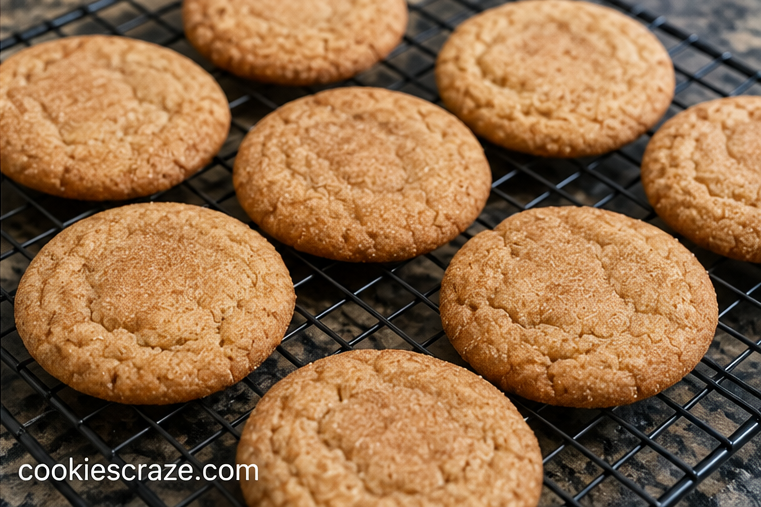
Bake one sheet at a time in the center of the oven for the most even heat circulation. The cookies are ready when the edges look set and the tops appear puffed and faintly cracked, while the centers still look softer than you expect. Let them remain on the baking sheet for five minutes before transferring them to a rack. That resting period finishes the structure without drying out the centers.
Mix the Cookie Dough
Mixing begins with butter temperature, and this single detail can decide whether your cookies emerge thick and chewy or spread into thin cinnamon puddles. Properly softened butter should sit around cool room temperature. Press it with a fingertip; the butter should indent easily but should not look shiny, greasy, or partially liquid. If you forgot to set it out, cut it into small cubes and leave them on a plate for 15 to 25 minutes. Avoid blasting a whole stick in the microwave, where the center can remain cold while the outer edges melt.
Place the softened butter and 1⅓ cups of granulated sugar in a large mixing bowl. Beat them together for about two to three minutes, pausing once to scrape the sides and bottom. The mixture should shift from dense and yellow to lighter, creamier, and visibly aerated. You are not simply combining ingredients; you are building a microscopic network of air pockets that will expand during baking. Add the egg and egg yolk one at a time, mixing well after each addition. Pour in the vanilla and optional lemon juice, then beat until the mixture looks smooth and cohesive.
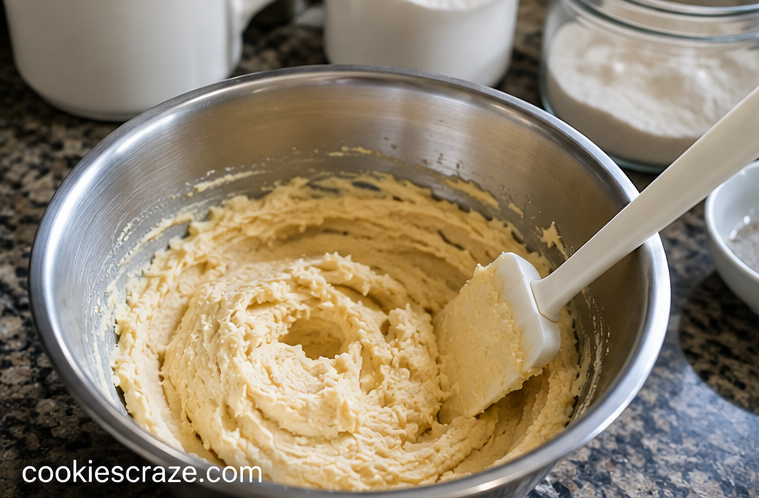
Add the whisked flour, baking powder, and salt in two portions. Use the lowest mixer speed or a sturdy spatula to prevent flour from flying across the counter. Stop when only a few pale streaks remain, then finish folding by hand. Overmixing at this stage encourages too much gluten development, which can make the cookies tougher and less tender. The finished dough should look thick, plush, and slightly tacky, but it should hold the shape of a scoop.
If the dough seems unusually sticky, resist the urge to immediately pour in more flour. First, let it rest for five minutes so the flour can absorb moisture. If it still feels too loose, refrigerate it briefly. Extra flour should be the final adjustment, added one tablespoon at a time, because even a small excess can make the cookies dry. Good cookie dough feels a little softer than modeling clay and a little firmer than frosting. Once it reaches that point, it is ready for shaping.
Shape and Coat the Cookies
The cinnamon-sugar coating is not a decorative afterthought. It creates the aromatic crust that separates a snickerdoodle from an ordinary butter cookie. Combine ¼ cup of granulated sugar with 1½ tablespoons of ground cinnamon in a shallow bowl. This ratio produces a bold cinnamon flavor without becoming dusty or bitter. Cinnamon varies in strength, so you can reduce it slightly if your spice is especially intense. Stir the mixture thoroughly, breaking up any compacted cinnamon with the back of a spoon.
Use a cookie scoop to portion the dough into pieces of roughly one and a half tablespoons each. Uniform sizing matters because cookies of different sizes will not finish baking at the same time. Roll each portion lightly between your palms until it forms a smooth ball. Do not squeeze or compact the dough aggressively. Gentle handling preserves the air created during creaming and helps the cookie maintain a tender texture. If the dough sticks to your hands, chill it for 15 minutes rather than dusting your palms with flour, which can create dry patches.
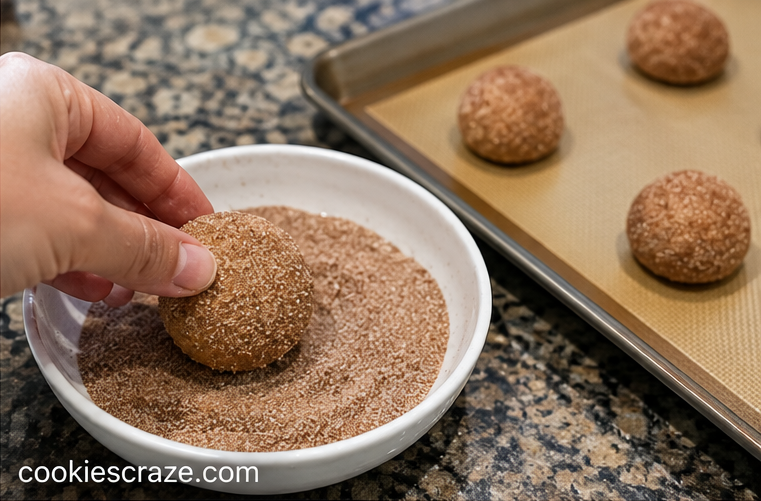
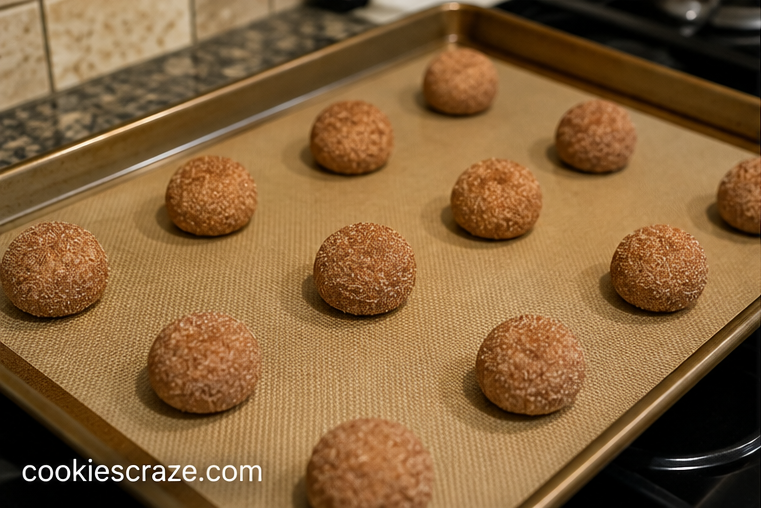
Drop each dough ball into the cinnamon sugar and roll it until every surface is generously covered. A thin, hesitant coating will partially disappear as the cookies spread, so give each ball a proper cinnamon jacket. For extra sparkle and a more pronounced crust, roll the dough twice. Place the coated balls on the prepared baking sheets with about two inches of space between them. Most standard pans will comfortably hold eight to ten cookies.
Leave the dough balls rounded rather than flattening them. They will spread naturally as the butter melts and the baking powder activates. If you prefer a wider, thinner cookie, press the tops very lightly with your palm before baking. For thicker cookies, chill the shaped balls for 20 minutes on the tray. At this stage, you can also freeze the coated dough balls until solid and transfer them to a storage bag for later baking. Whether you bake them immediately or save them for another day, consistent size and a generous cinnamon coating will give the batch an attractive, bakery-style finish.
Bake Until Soft and Crinkled
Bake the cookies at 350°F on the center rack, ideally one tray at a time. Placing two trays in the oven can block air circulation and create uneven heat zones, especially in smaller home ovens. If you need to bake two sheets together, place them in the upper and lower thirds of the oven and switch their positions halfway through. Begin checking the cookies at nine minutes. Most batches will need between nine and eleven minutes, although exact timing depends on dough temperature, portion size, pan color, and the accuracy of your oven.
The best indicator is appearance, not the timer alone. The outer edges should look set and slightly matte. The tops may show delicate cracks, and the centers should appear puffed, soft, and just a little underdone. Do not wait for the entire surface to turn golden brown. By that stage, the residual heat may push the cookies past chewy and into crisp territory. Snickerdoodles continue cooking on the hot baking sheet after leaving the oven, so pulling them early is the secret to a soft center.
Let the pan rest undisturbed for about five minutes. During this time, the cookies will settle, the tops will develop more visible wrinkles, and the fragile centers will become sturdy enough to move. Slide a thin spatula underneath each cookie and transfer it to a wire rack. The cookies will feel extremely soft while warm but firm as they cool. That transformation is normal. Tasting one immediately may make you think it is underbaked, while the same cookie will have the ideal chew 20 minutes later.
For perfectly round cookies, use a large circular cutter or the rim of a wide glass to gently “scoot” each hot cookie into shape. Place the ring around the cookie and move it in small circles without pressing down. This technique is optional, but it creates polished edges when appearance matters. Once cool, the cookies should have pale golden bottoms, crisp cinnamon-sugar exteriors, and centers that bend slightly before breaking. That combination signals a well-baked snickerdoodle.
Troubleshooting Common Snickerdoodle Problems
Even a simple cookie can behave differently from one kitchen to another, but most problems have a clear cause. Excessive spreading is the most common complaint. It usually happens when the butter is too warm, the dough is placed on a hot baking sheet, the flour is under-measured, or the baking powder has lost its strength. Chill overly soft dough for 20 to 30 minutes and always allow baking sheets to cool between batches. Parchment paper also helps create more predictable spreading than a heavily greased pan.
If the cookies barely spread and remain in tall mounds, the dough may contain too much flour. This often happens when a measuring cup is pushed directly into a flour bag, packing extra flour into the cup. The butter may also have been too cold, preventing proper creaming. Weighing the flour at 330 grams gives the most consistent outcome. When the dough is already mixed and seems dry or crumbly, work in one or two teaspoons of milk rather than adding a full egg, which would change the recipe too dramatically.
Cakey cookies usually result from too much baking powder, too much egg white, or vigorous mixing after the flour is added. Check that you used teaspoons rather than tablespoons, and level the measuring spoon. The extra yolk in this recipe encourages chewiness, but substituting a second whole egg introduces more water and protein, creating a puffier texture. Mix the dry ingredients only until combined.
Hard or dry cookies are usually overbaked. The centers should still look soft when the pan leaves the oven. Remember that a cookie can continue cooking for several minutes on hot metal. Pale cookies are not necessarily underbaked, since this recipe contains no brown sugar and uses baking powder rather than baking soda. If the bottoms burn, use a light-colored pan, move the rack toward the center, or place an empty baking sheet under the active pan as insulation. A little observation goes a long way. Once you identify whether the issue comes from temperature, measurement, or timing, the next batch becomes much easier to control.
Easy Flavor Variations
The classic cinnamon coating is hard to beat, but this dough also works as a flexible base for creative variations. One of the easiest changes is to alter the spice blend. Replace part of the cinnamon with ground cardamom for a floral, citrusy edge, or add a pinch of nutmeg for a warmer holiday flavor. Pumpkin pie spice can transform the cookies into an autumn dessert without changing the dough itself. Keep the total amount of spice in the coating close to one and a half tablespoons so the mixture remains balanced and does not become bitter.
For a bright citrus version, rub the finely grated zest of one orange into the granulated sugar before creaming it with the butter. Rubbing releases the fragrant oils and distributes them throughout the dough. Orange and cinnamon taste especially natural together, creating a cookie that feels festive without becoming overly sweet. Lemon zest also works, particularly when paired with the optional teaspoon of lemon juice. Use only the colored portion of the peel; the white pith underneath can taste harsh.
Chocolate lovers can fold in ¾ cup of miniature chocolate chips after adding the flour. Mini chips spread more evenly than standard chips and allow the cinnamon flavor to remain noticeable. White chocolate chips create a sweeter, creamier variation, while finely chopped dark chocolate adds contrast. Chopped toasted pecans or walnuts can add crunch, though the cookies will lose some of their classic smooth texture.
You can also create a filled snickerdoodle by wrapping the dough around a small piece of soft caramel. Seal the dough carefully so the caramel does not leak onto the pan, and allow the cookies to cool before eating because the centers become extremely hot. Another option is to drizzle the cooled cookies with a thin vanilla glaze made from powdered sugar and milk. These changes work best when treated as accents rather than a complete redesign. The dough’s buttery simplicity is its strength, and any added flavor should support the cinnamon rather than bury it.
Serving Ideas
Snickerdoodles rarely need elaborate presentation. A warm cookie and a cold glass of milk can feel complete on their own. Still, a few thoughtful pairings can turn a familiar cookie into a memorable dessert. Serve freshly baked snickerdoodles with coffee, chai, hot chocolate, or black tea. The cinnamon coating mirrors the warm spices in chai, while coffee balances the sugar with roasted bitterness. During colder months, placing a cookie across the rim of a mug creates the kind of cozy detail people remember.
For an easy plated dessert, sandwich a scoop of vanilla ice cream between two cooled cookies. Choose cookies of similar size, press them gently around the ice cream, and freeze the sandwiches for 30 minutes so they firm up. Cinnamon ice cream, dulce de leche ice cream, or coffee ice cream can make the combination even more interesting. A drizzle of caramel sauce and a small pinch of flaky salt turns the sandwich into something that feels restaurant-worthy without requiring advanced pastry skills.
Snickerdoodles also make excellent components for a dessert board. Arrange them with apple slices, pears, grapes, chocolate pieces, toasted nuts, and small bowls of caramel or cream-cheese dip. Their pale color and cinnamon-speckled surface look especially attractive beside darker chocolate cookies and colorful fruit. For holiday gifting, stack four or five cookies in a clear bag, tie the package with ribbon, and include a handwritten label. Make sure the cookies are completely cool before packaging, or trapped steam can soften the cinnamon crust and make the bag damp.
Crumbled snickerdoodles can become a topping for yogurt, oatmeal, pudding, or baked apples. Slightly stale cookies work particularly well because they absorb moisture without immediately turning mushy. You can also pulse them into crumbs and use them as the base of a no-bake cheesecake. The cinnamon-butter flavor pairs naturally with apples, pumpkin, caramel, vanilla, and cream cheese. Whether served simply or incorporated into a larger dessert, these cookies bring warmth and familiarity to the table.
Storage and Freezing
Proper storage keeps snickerdoodles soft without making their cinnamon coating unpleasantly damp. Once the cookies have cooled completely, place them in an airtight container at room temperature. Separate layers with parchment or wax paper so the cookies do not stick together. They will taste best during the first three days, but they usually remain enjoyable for up to five days. Avoid refrigerating baked cookies unless your kitchen is unusually hot. Refrigerator air can dry them out and dull their buttery flavor.
A common home-baking trick is to place a small piece of sandwich bread in the storage container. The cookies absorb some of the bread’s moisture, helping them stay soft. Replace the bread when it becomes hard, and keep it from resting directly on the cookies so it does not create a damp spot. A small flour tortilla can perform a similar job with less risk of transferring flavor. Do not use apple slices, since they release far more moisture and can make the cookies sticky or encourage spoilage.
Baked snickerdoodles freeze well for about two to three months. Arrange the cooled cookies in a single layer until firm, then transfer them to a freezer-safe container with parchment between layers. Thaw them at room temperature while still covered so condensation forms on the container rather than directly on the cookie surfaces. A few seconds in the microwave can restore a fresh-from-the-oven softness, but overheating will make the cookies tough once they cool again.
Freezing unbaked dough is even more convenient. Shape and coat the dough balls, place them on a tray, and freeze until solid. Transfer the frozen balls to a labeled freezer bag and remove as much air as possible. Bake them straight from frozen at 350°F, adding roughly one to three minutes to the usual baking time. There is no need to thaw them first. Having frozen cookie dough ready means you can bake two cookies after dinner instead of committing to an entire batch, which may be the most practical kind of kitchen luxury.
Frequently Asked Questions
Can I Use Baking Soda Without Cream of Tartar?
Only if another acidic ingredient, such as lemon juice or vinegar, is included. Without acid, baking soda may leave a bitter or soapy taste. For this recipe, baking powder is the easier and more reliable substitute.
Can I Substitute Lemon Juice or Vinegar?
Yes, but they should be used carefully because both add liquid to the dough. A small amount can recreate some of the classic tang. When using baking powder, lemon juice or vinegar is optional rather than necessary.
Why Did My Snickerdoodles Turn Out Cakey?
Cakey cookies usually result from too much flour, too much baking powder, or using an extra whole egg instead of a yolk. Overmixing can also make the texture more bread-like. Measure accurately and mix only until combined.
How Do I Keep Snickerdoodles Soft?
Remove the cookies while the centers still look slightly underbaked, then let them finish setting on the pan. Store them in an airtight container once fully cooled. A small piece of bread can also help maintain moisture.
Can I Make This Dough Ahead of Time?
Yes, the dough can be refrigerated for up to 48 hours or frozen for about three months. Shape the dough into balls before freezing for easier baking later. Frozen dough balls can be baked directly from the freezer with a few extra minutes added.
Conclusion
Making a delicious snickerdoodle recipe without cream of tartar is easier than you might think. Baking powder provides the lift you need, while butter, sugar, cinnamon, and an extra egg yolk help create soft centers, lightly crisp edges, and that classic cozy flavor.
The key is to measure the flour carefully, avoid overmixing, and remove the cookies from the oven while the centers still look slightly soft. You can also chill the dough for thicker cookies or freeze shaped dough balls for later.
This recipe proves that you do not need a fully stocked pantry to make a satisfying batch of homemade snickerdoodles. With simple ingredients and a few smart baking techniques, you can enjoy warm, cinnamon-sugar cookies whenever the craving hits.